
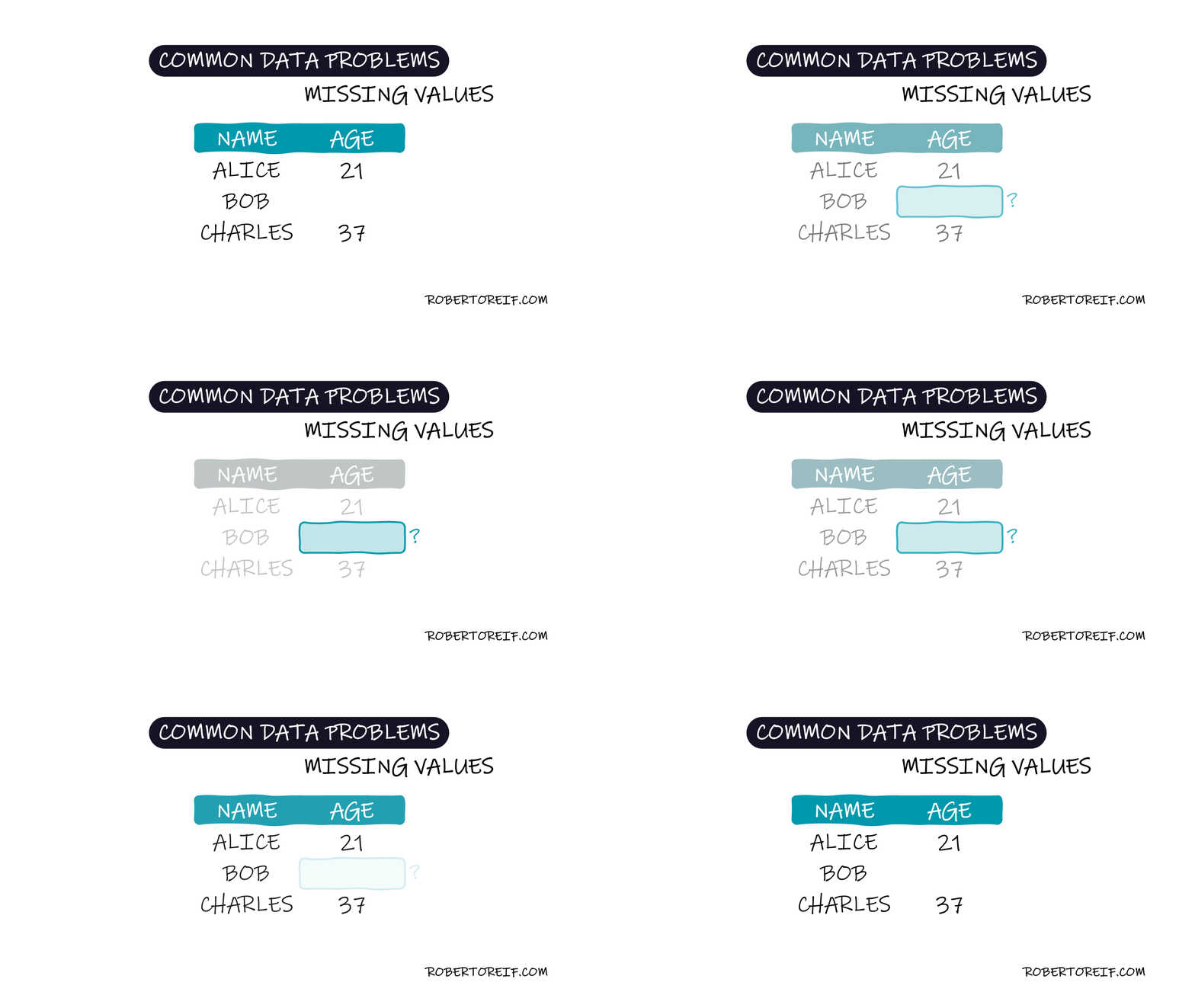
One of the most frequent issues encountered when working with real-world datasets is missing data. Missing values can arise for a variety of reasons ranging from data corruption, system errors, or sensor failures, to simple oversights during data collection or entry.
Effectively handling missing values is critical, as they can significantly impact the quality of analysis, model performance, and the validity of results. Here are some common strategies used to address this challenge:
Remove the entire row: if the missing value is isolated and the dataset is large, dropping the row may have minimal impact.
Impute with the mean, median, or mode: a simple and widely used approach that works well when data is symmetrically distributed (mean) or skewed (median).
Impute with a default value (e.g., 0 or “Unknown”): useful when a neutral or placeholder value makes sense contextually, though care must be taken not to introduce bias.
Predict the missing value using machine learning: more advanced techniques such as K-Nearest Neighbors (KNN), regression models, or decision trees can be used to estimate missing values based on patterns in the rest of the data.
Forward or backward fill (time series data): in sequential data, missing values can sometimes be filled using the previous or next valid entry.
Use data domain knowledge: in some cases, understanding the source and nature of the data can inform a more accurate or meaningful imputation strategy.
Mark and model missingness explicitly: sometimes the fact that data is missing is itself meaningful. In such cases, adding an indicator variable for missing values can be helpful.
How have you approached missing data in your work?
Quisque iaculis facilisis lacinia. Mauris euismod pellentesque tellus sit amet mollis.