
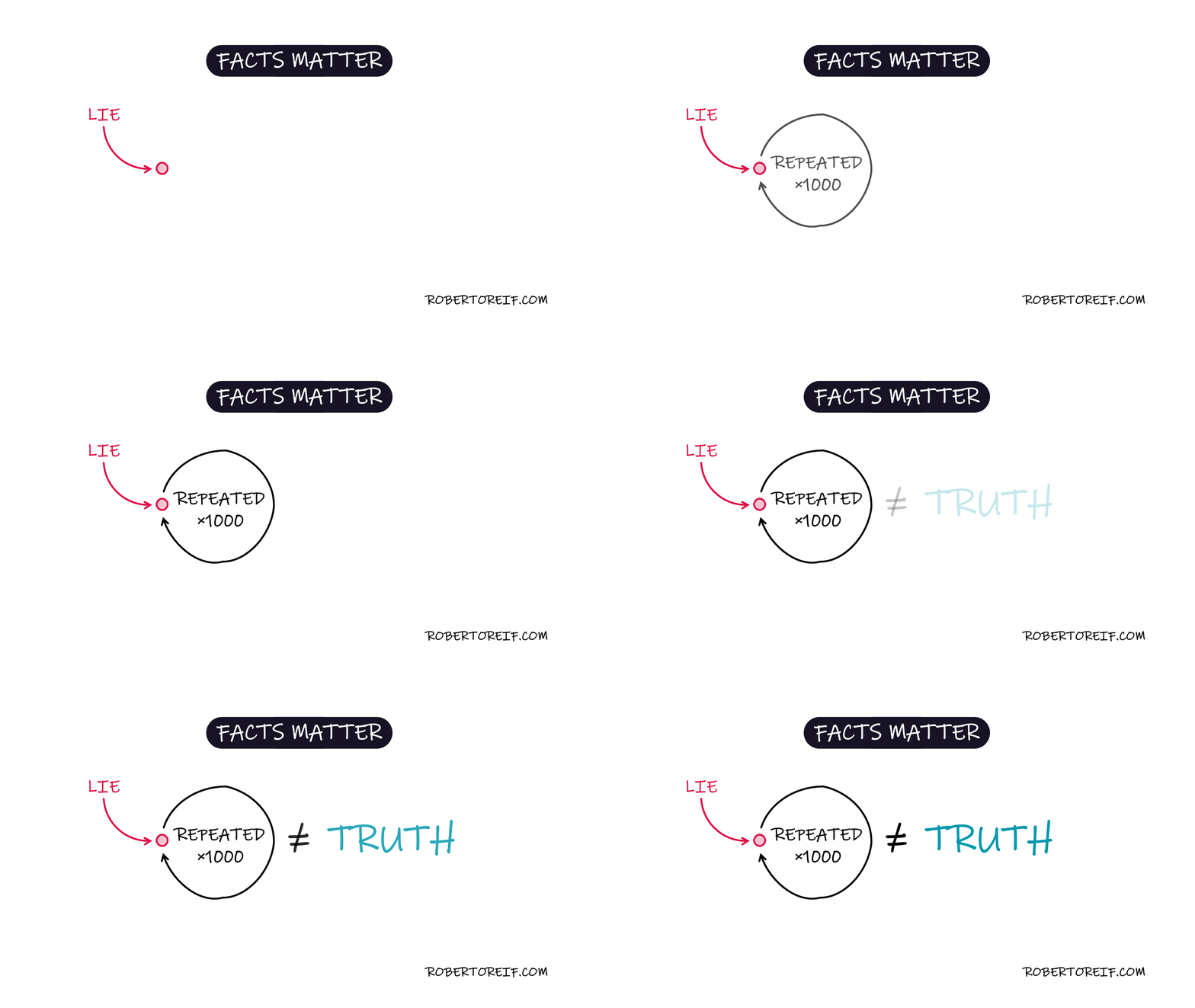
One of the most valuable lessons I learned as a graduate student was witnessing some of the brightest and most accomplished professors confidently say, “I don’t know.” Initially, I saw this as a sign of weakness or lack of intelligence. Over time, I came to understand that admitting uncertainty is actually a sign of intellectual strength. It demonstrates humility, a commitment to truth, and a willingness to seek out the right answers rather than defaulting to speculation. In many ways, it’s a power move, one that fosters trust and encourages deeper learning.
As I’ve engaged more with social media, I’ve noticed a troubling contrast. Many individuals make bold, unsubstantiated claims that, despite lacking evidence, quickly gain traction. These claims can be harmful on a personal level, spreading falsehoods about individuals, or on a broader scale, leading to misinformation that affects entire communities. For example, misleading medical claims about the effectiveness of a treatment can have serious consequences when not backed by rigorous scientific research.
I’ve personally been on the receiving end of an attack on a social media platform. From that experience, I observed two distinct types of responses. There were those who approached me with genuine curiosity, asking thoughtful questions and engaging in meaningful dialogue. Then there was a small but vocal minority who chose to amplify the noise, spreading misinformation without concern for the truth. While personal attacks are never easy to navigate, I’ve found that taking a step back and trying to understand why people behave this way can be helpful. Fear, a desire for belonging, or past experiences of exclusion can all contribute to why someone latches onto misinformation or engages in harmful behavior.
In a world where falsehoods can spread rapidly, it’s more important than ever to foster critical thinking and create space for respectful, evidence-based discussions.
Have you ever encountered a situation where misinformation was amplified in a way that caused real harm?
