
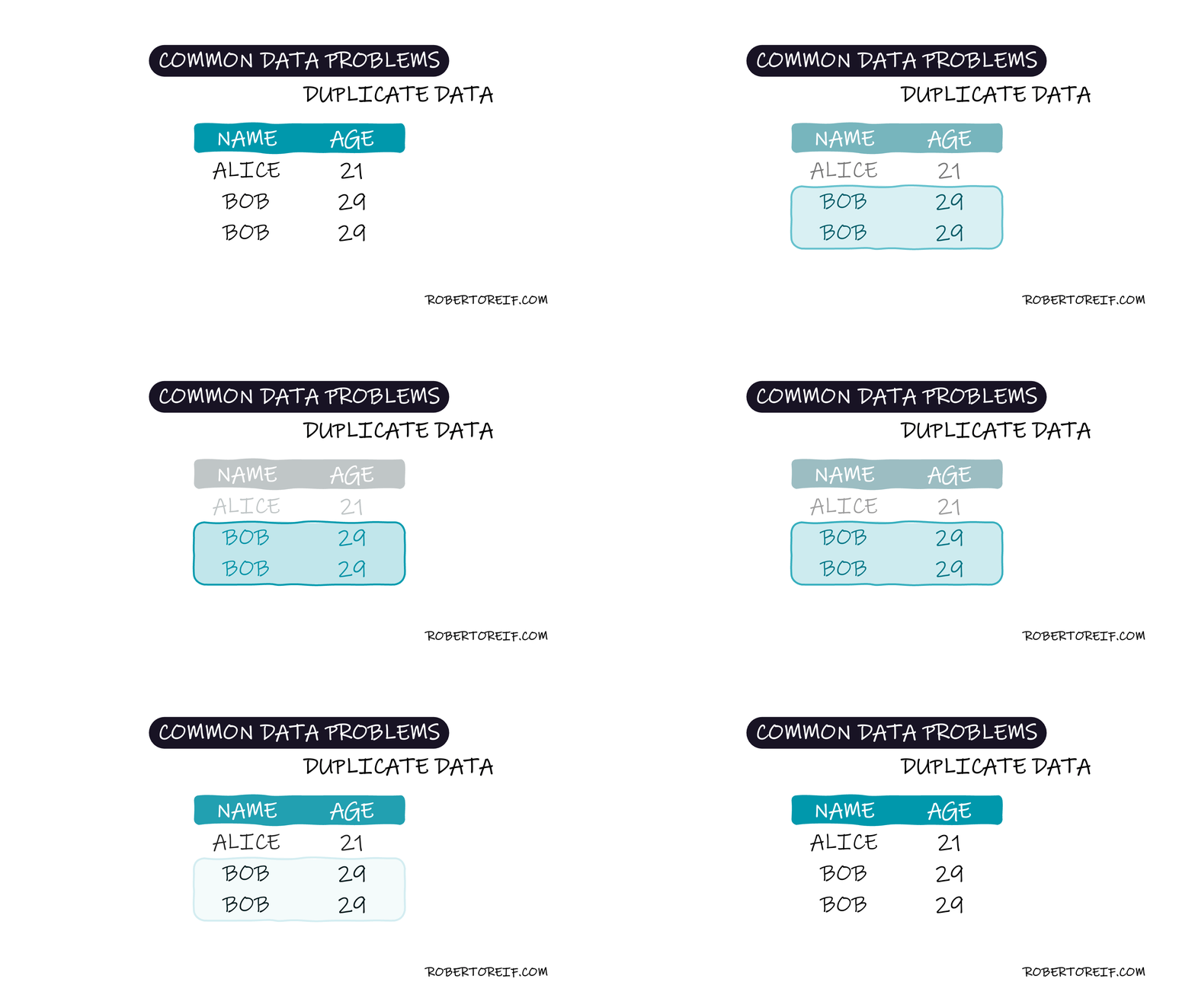
One of the recurring issues in data preprocessing is the presence of duplicate entries, where records appear more than once in a dataset. Duplicate data can skew analysis, inflate metrics, and reduce the accuracy of models if not properly addressed.
Duplicates can occur for several reasons, including:
Lack of validation when new data is added to a system
Users unintentionally submitting the same information multiple times
System errors during data migration or integration
Data corruption or poorly designed data pipelines
Merging data from multiple sources without proper deduplication logic
Common solutions for handling duplicates involve:
Identifying and removing exact duplicates: use functions such as .drop_duplicates() in pandas to eliminate rows that are completely identical across selected fields.
Fuzzy matching for near-duplicates: records might not be exactly the same, but close enough (e.g., typos or different casing). Tools like fuzzywuzzy can help detect and resolve these cases.
Group-based deduplication: when duplicates are identified by grouping on certain key fields (e.g., email address or customer ID) and aggregating relevant information.
Timestamp prioritization: keep the most recent or earliest record when duplicate entries exist, depending on the business logic.
Manual review flags: if automatic deduplication isn't reliable, flag potential duplicates for human validation.
Data standardization prior to deduplication: clean and normalize data (e.g., consistent capitalization, trimming whitespace, standard date formats) to better detect duplicates.
Properly identifying and managing duplicate data is essential for building trust in your datasets and ensuring the integrity of your analysis.
How have you handled duplicate data in your work?
