
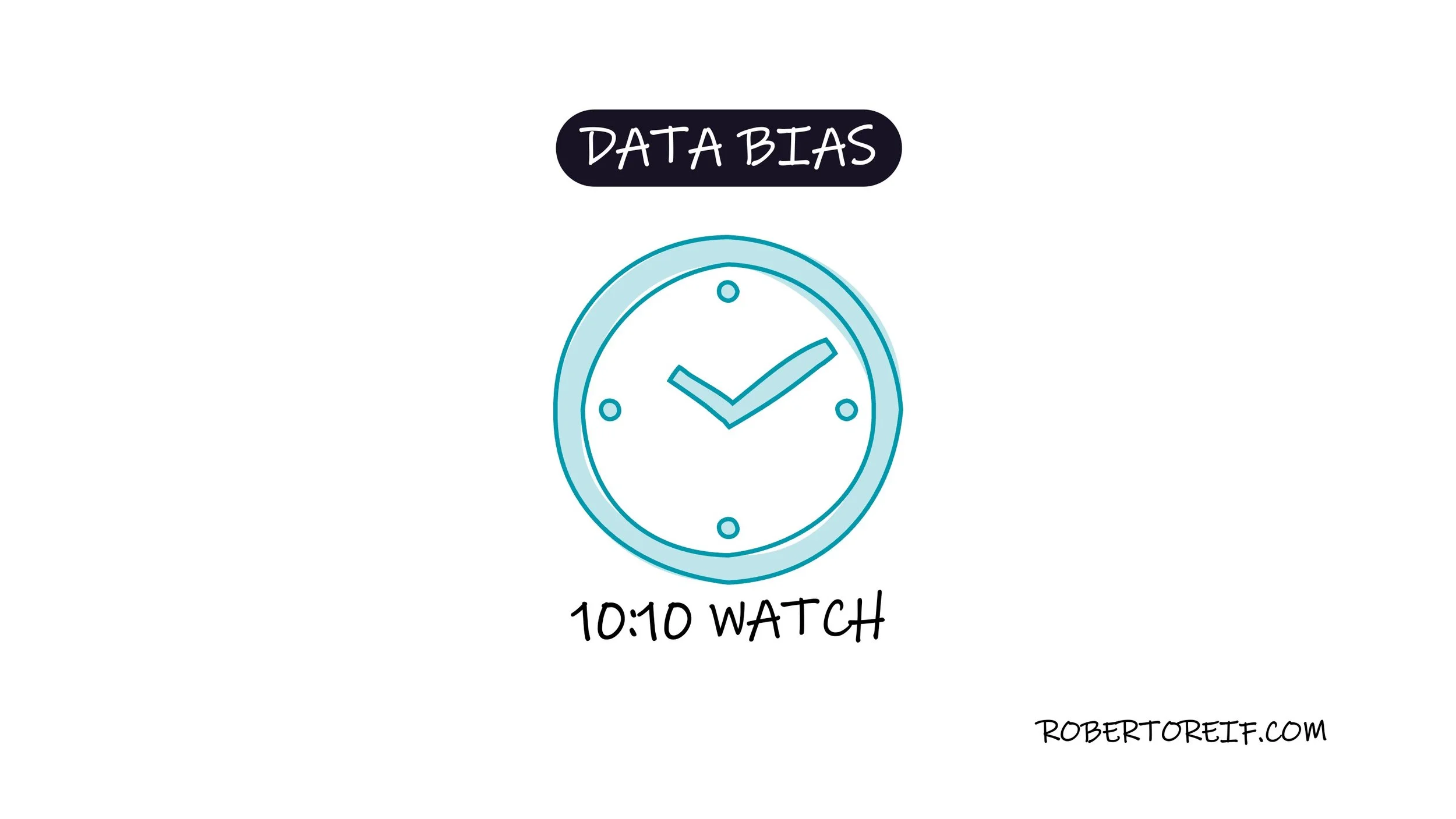
A well-known and intuitive example of data bias is the “10:10 watch” phenomenon. In most analog watch advertisements, the hands are intentionally set to 10:10. This choice is largely aesthetic because it creates a symmetrical, upward “V” shape that resembles a smile, draws the viewer’s eye, and elegantly frames the brand’s logo, which is usually placed at the 12 o’clock position. As a result, the image feels balanced, positive, and visually appealing to potential buyers.
Because this design choice has been used so consistently for decades, the vast majority of watch images available on the internet reflect this same configuration. When generative AI models are trained on these images, they inadvertently learn this pattern as the “default.” Early generative models would often produce watches showing 10:10 regardless of the specific time requested in the prompt. This was not because they were “wrong,” but because the training data overwhelmingly reinforced that bias. Over time, these models have improved as training processes increasingly identify, surface, and correct for such biases.
This same issue appears more broadly across AI systems. Data bias often arises when training datasets fail to adequately represent certain populations, such as people of different races, genders, ages, or socioeconomic backgrounds. When those gaps exist, models can produce skewed, exclusionary, or even harmful outputs, reinforcing racial or gender stereotypes rather than reflecting reality.
Bias in AI is rarely intentional, but it is almost always a reflection of the data used to build the system. Recognizing and addressing these biases is a critical part of responsible data science and AI development.
How have you encountered data bias in your own work or studies?
