
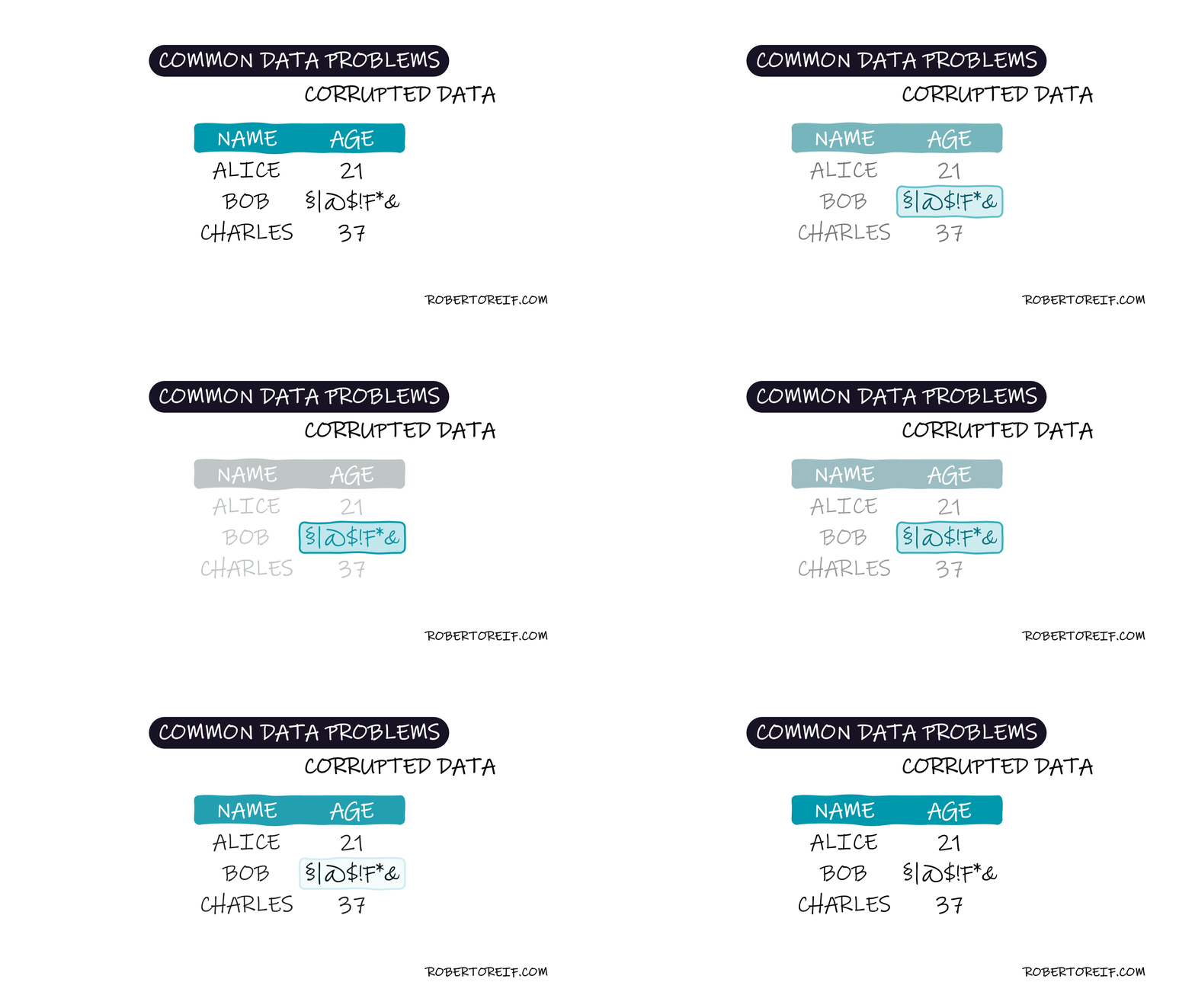
One of the fundamental challenges in working with real-world datasets is dealing with corrupted data. This refers to data that has been altered, damaged, or rendered inaccurate, making it unreliable for analysis. Corrupted data can silently undermine the quality of insights and lead to misleading conclusions if not properly detected and addressed.
Common causes of data corruption include:
Hardware or software failures during data collection or storage
Network interruptions during transmission
Mismatched encoding or data format conversions
Faulty sensors or malfunctioning data sources
Human error during data entry or file manipulation
Merging incompatible datasets without proper validation
Corrupted data can be handled in the following ways:
Remove the corrupted records: if the damage is extensive and the data point cannot be salvaged or verified, deletion may be the safest option.
Impute missing or incorrect values: replace corrupted data with a reasonable estimate such as the mean, median, or mode of the relevant variable.
Use model-based imputation: predict the corrupted value using other reliable features through methods like regression or k-nearest neighbors (KNN).
To avoid data corruption one may:
Apply data validation rules: enforce format, range, or type constraints during data collection and preprocessing to flag and correct corruption early.
Trace and fix the source: it's critical to investigate why the data became corrupted. Addressing the root cause, be it a malfunctioning pipeline, poorly designed form, or faulty integration, helps prevent recurrence.
Log and monitor anomalies: implement automated alerts or audits to detect and respond to corrupted data in real time.
Maintaining data integrity is important to building trust in your analysis and models. Proactively identifying and mitigating corrupted data ensures more accurate, reliable, and actionable results.
What strategies have you used to detect or fix corrupted data?
